
Marketing automation is software that executes repetitive marketing tasks automatically through data-driven triggers and workflows, replacing manual effort across email, social media, CRM updates, and ad retargeting. Platforms like HubSpot, Salesforce Marketing Cloud, and Oracle Eloqua sit at the center of this category, giving marketing teams the ability to run personalized campaigns at scale without touching every message individually. The payoff is measurable: organizations earn an average ROI of $5.44 for every dollar spent, with payback periods under six months. That figure alone explains why marketing automation has moved from a nice-to-have to a core operating tool for growth-focused businesses.
What is marketing automation and how does it actually work?
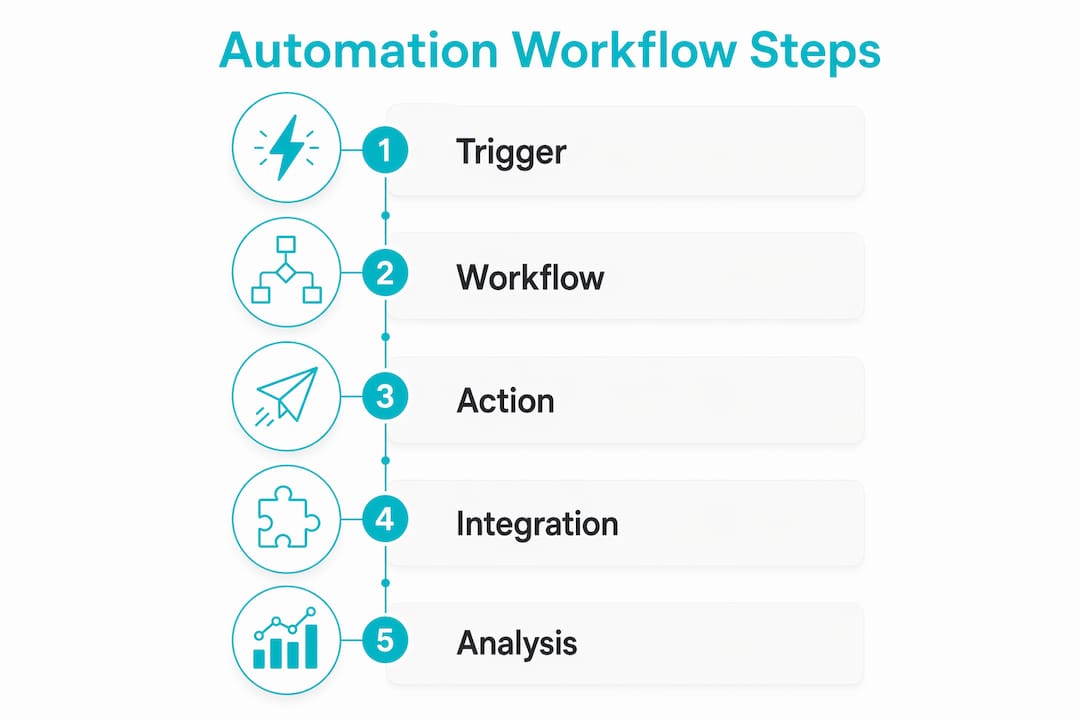
Marketing automation converts customer actions into automated, rule-based workflows that execute without manual intervention. A visitor downloads a whitepaper, and the system fires a welcome email, adds a lead score, and queues a follow-up sequence. No one on your team pressed send. The workflow ran because a trigger fired and a set of pre-defined rules responded to it.
The mechanics behind this involve three core components: a trigger (the customer action or time condition), a workflow (the sequence of steps the system follows), and an integration layer that connects your CRM, website, ad platforms, and email service into one coordinated system. Marketing automation integrates data from multiple touchpoints to build a complete behavioral picture of each contact, then uses that picture to decide what message to send next.

One distinction matters here. Many businesses confuse email scheduling tools with full marketing automation. Scheduling a newsletter is not automation. True marketing automation is an orchestration layer integrating CRM data, website behavior tracking, social media scheduling, ad retargeting, lead scoring, and email nurture campaigns in real time. The difference is the same as the difference between a printed train schedule and a live dispatch system that reroutes trains based on current conditions.
Modern platforms have also closed the gap between technical complexity and usability. Visual workflow designers and AI assistance now allow marketing teams to build and manage automation without writing code or filing IT tickets. That shift matters enormously for small and mid-size businesses that cannot afford a dedicated marketing engineer.
Pro Tip: Before building any workflow, map the customer journey on paper first. Knowing exactly what action should trigger what response prevents you from building automation that fires at the wrong moment or sends conflicting messages.
What are the key benefits of marketing automation?
The most direct benefit of marketing automation is time recovery. When your team stops manually sending follow-up emails, updating contact records, and segmenting lists by hand, those hours redirect to strategy, content, and creative work that actually requires human judgment.
Beyond time savings, the benefits of marketing automation stack up across the entire revenue funnel:
- Lead generation: Automated landing page follow-ups and retargeting sequences capture and nurture leads that would otherwise go cold.
- Segmentation: Behavioral data lets you split audiences by product interest, purchase history, or engagement level and deliver messages that match each segment precisely.
- Lead scoring: Contacts accumulate points based on actions like email opens, page visits, and form fills, so your sales team focuses on the highest-intent prospects first.
- Conversion rates: Personalized, timely messages consistently outperform batch-and-blast campaigns because they respond to what a contact actually did, not what you assume they want.
- Analytics: Every workflow generates data. You can see open rates, click paths, conversion events, and revenue attribution at the campaign level, which makes optimization a continuous process rather than a quarterly guess.
Marketing automation also formalizes the handoff between marketing and sales, which is one of the most overlooked efficiency gains in the entire stack. When a lead hits a score threshold, the system automatically notifies a sales rep and logs the activity in the CRM. No leads fall through the cracks because the process does not depend on someone remembering to check a spreadsheet.
How to choose the right marketing automation tools for your business
Choosing the right platform starts with an honest assessment of your data maturity. If you are not yet tracking cross-channel behavioral signals consistently, starting with a simpler email marketing platform before scaling to a full automation suite is the smarter move. Buying a platform built for enterprise-level orchestration when your contact list is 2,000 people means paying for features you cannot use yet.
When you are ready to evaluate full marketing automation tools, focus on these core features:
The key features to prioritize are multi-channel workflow orchestration, lead scoring, CRM integration, dynamic content personalization, and AI-powered insights. A platform missing two or more of these is likely an email tool wearing an automation label.
Here is a practical comparison of widely used platforms across business sizes:
| Platform | Best for | Core strengths | Complexity |
|---|---|---|---|
| HubSpot | SMBs to mid-market | CRM-native, visual workflows, free tier available | Low to medium |
| Salesforce Marketing Cloud | Enterprise | Deep CRM integration, advanced segmentation, AI | High |
| Oracle Eloqua | Enterprise | B2B lead management, complex campaign orchestration | High |
| Mailchimp | Small businesses | Email-first, simple automation, affordable entry point | Low |
| ActiveCampaign | SMBs | Strong automation depth, CRM included, good pricing | Medium |
The table above reflects a pattern worth noting: complexity and cost scale together. A small business running a single product line does not need Oracle Eloqua. Starting with Mailchimp or ActiveCampaign and migrating to HubSpot as your workflows grow is a legitimate and cost-effective path.
Pro Tip: Request a sandbox or trial environment before committing to any platform. Build one real workflow during the trial, not a demo workflow. If you cannot complete it without calling support, the platform is too complex for your current team.
What are effective marketing automation strategies and best practices?
Effective marketing automation strategies are built around customer behavior, not internal marketing calendars. The platforms give you the technical capability. Strategy determines whether that capability produces revenue or just activity.
Follow these steps to implement automation that actually works:
-
Map trigger points to customer intent. Identify the specific actions that signal buying intent, such as visiting a pricing page three times, downloading a product comparison guide, or abandoning a cart. These are your highest-value triggers. Build workflows around them first before automating lower-priority touchpoints.
-
Segment before you automate. Sending the same automated sequence to a first-time visitor and a repeat customer is a waste of both the technology and the relationship. Use behavioral and demographic data to create distinct segments, then build separate workflows for each. Personalization at this level is what separates effective automation strategies from digital noise.
-
Align your CRM and sales team before launch. Marketing automation that is not connected to your sales process creates a parallel universe where leads get nurtured but never converted. Define lead scoring thresholds with your sales team, agree on what constitutes a sales-qualified lead, and build the handoff workflow before you go live.
-
Set a review cadence and stick to it. Automation is not a set-it-and-forget-it system. Workflows that performed well six months ago may now be sending outdated offers or messaging that no longer reflects your positioning. Review every active workflow quarterly. Kill what is not converting. Optimize what is close.
-
Guard your data quality. Automation amplifies whatever is in your database. Duplicate contacts, incorrect segmentation tags, and outdated email addresses do not just reduce effectiveness. They actively damage deliverability and lead scoring accuracy. Clean your list before you automate, and build data hygiene into your onboarding process for every new contact.
The most common pitfall in marketing automation for small businesses is over-automating too early. Businesses that build 15 workflows before they understand which two actually drive revenue end up with a system that is expensive to maintain and impossible to diagnose when something breaks.
Pro Tip: Start with three workflows: a welcome sequence for new subscribers, a lead nurture sequence for high-intent prospects, and a re-engagement sequence for inactive contacts. Master those before adding complexity.
Key takeaways
Marketing automation delivers measurable ROI only when workflows are built around real behavioral data, aligned with sales, and continuously optimized.
| Point | Details |
|---|---|
| Core definition | Marketing automation executes rule-based workflows triggered by customer actions, not manual effort. |
| ROI benchmark | Organizations average $5.44 return per dollar spent, with payback under six months. |
| Tool selection | Match platform complexity to your data maturity; start simple and scale up as needs grow. |
| Strategy first | Build workflows around high-intent trigger points and segment audiences before automating. |
| Ongoing optimization | Review all active workflows quarterly and maintain clean data to protect deliverability and scoring accuracy. |
Why most businesses get marketing automation backwards
I have worked with dozens of businesses that bought a marketing automation platform and then tried to figure out what to automate. That is the wrong order entirely. The technology should follow the strategy, not lead it.
The businesses that see the strongest results start by identifying the two or three moments in their customer journey where a timely, relevant message would change behavior. A prospect who just viewed the pricing page is not the same as someone who opened a newsletter. Treating them identically wastes the entire point of having automation.
What I find genuinely underappreciated is how much the AI capabilities in modern platforms have lowered the barrier for non-technical teams. Three years ago, building a multi-branch workflow with conditional logic required either a developer or a very patient marketing ops specialist. Today, platforms guide you through it with drag-and-drop builders and AI-suggested next steps. That shift means the bottleneck is no longer technical. It is strategic clarity.
The other thing I tell every business owner: do not automate a broken process. If your lead follow-up is inconsistent because the messaging is unclear, automation will just make that inconsistency faster and more scalable. Fix the message first. Then automate it. You can explore email campaign types as a starting point for building the right message framework before you wire it into a workflow.
The businesses that sustain results from automation are the ones that treat it as a living system. They review performance data, kill underperforming workflows without sentiment, and test new triggers as their customer behavior evolves. That discipline is what separates a marketing automation success story from an expensive subscription that runs in the background and does very little.
— Matthew
Ready to put marketing automation to work for your business?
Viralmarketingstudio builds and deploys marketing automation systems for businesses that want results, not just software licenses. From workflow architecture and CRM integration to AI-powered segmentation and campaign analytics, the team at Viralmarketingstudio handles the technical setup so your marketing team can focus on strategy and creative.
Whether you are starting from scratch or migrating off a platform that no longer fits your growth stage, Viralmarketingstudio designs automation infrastructure that connects your marketing, sales, and customer data into one coordinated system. Visit Viralmarketingstudio to explore tailored automation solutions built for your business size and goals.
FAQ
What is marketing automation in simple terms?
Marketing automation is software that automatically sends messages, updates records, and executes marketing tasks based on customer actions or scheduled triggers. It replaces manual, repetitive work with structured workflows that run without human intervention.
How is marketing automation different from email marketing?
Email marketing sends messages to a list. Marketing automation is a broader orchestration layer that integrates email, CRM, lead scoring, ad retargeting, and behavioral tracking into coordinated workflows that respond to individual customer actions in real time.
What ROI can businesses expect from marketing automation?
Organizations earn an average of $5.44 for every dollar spent on marketing automation, with most businesses recovering their investment in under six months.
Is marketing automation suitable for small businesses?
Yes. Platforms like Mailchimp and ActiveCampaign offer automation features at price points accessible to small businesses. Experts recommend starting with email-first tools and scaling to full automation platforms as your data volume and workflow complexity grow.
What are the most important features to look for in a marketing automation platform?
The core features that separate true marketing automation from basic email tools are multi-channel workflow orchestration, lead scoring, CRM integration, dynamic content personalization, and AI-powered analytics. A platform missing most of these is not a full automation solution.