
A bootstrap marketing automation strategy is a system for automating repetitive marketing tasks using low-cost or free tools, without relying on enterprise software or agency retainers. Small business owners who build these systems correctly can capture leads, nurture prospects, and convert customers at a fraction of traditional costs. Tools like Make.com, n8n, and Claude Code make this achievable for under $100 per month. The key is pairing the right tools with disciplined, iterative workflows that improve over time. This article gives you a practical framework to build that system from the ground up.
What affordable tools enable bootstrap marketing automation?
The standard industry term for what most small business owners are building is marketing automation, and the bootstrap version simply means doing it without enterprise budgets. HubSpot Marketing Hub starts at $800/month, which puts it out of reach for most early-stage businesses. The good news is that no-code platforms replicate most of that functionality for under $100 per month.
Make.com is the most accessible starting point. It visually orchestrates workflows that connect your CRM, email platform, landing pages, and social channels without writing a single line of code. n8n is the open-source alternative, giving you full control over your data and the ability to self-host for near-zero cost. For teams comfortable with AI-assisted coding, Claude Code combined with Make enables custom behavior-based triggers that differentiate warm leads from cold ones, something rigid enterprise templates cannot do well.

Here is a practical comparison of the core tools:
| Tool | Monthly Cost | Best For | Ease of Use |
|---|---|---|---|
| Make.com | $9–$29 | Visual workflow automation | Beginner |
| n8n (self-hosted) | Free | Full data control, custom logic | Intermediate |
| Mailchimp | Free–$20 | Email marketing and sequences | Beginner |
| HubSpot CRM (free tier) | Free | Contact management and tracking | Beginner |
| Claude Code | Usage-based | Custom AI-driven workflow logic | Intermediate |
For paid advertising, AI-driven ad managers automate the full campaign lifecycle, including copywriting, bidding, and real-time budget reallocation. These tools deliver results comparable to agency management at a fraction of the cost. The catch is that AI ad optimization requires minimum spend of roughly $900–$1,800 per month to exit learning phases effectively. Below that threshold, the AI does not have enough data to optimize well.
Pro Tip: Start with one tool that solves your biggest bottleneck. Add complexity only after that first tool is producing measurable results. Tool sprawl is the fastest way to waste your budget.
How do you build practical automation workflows on a budget?
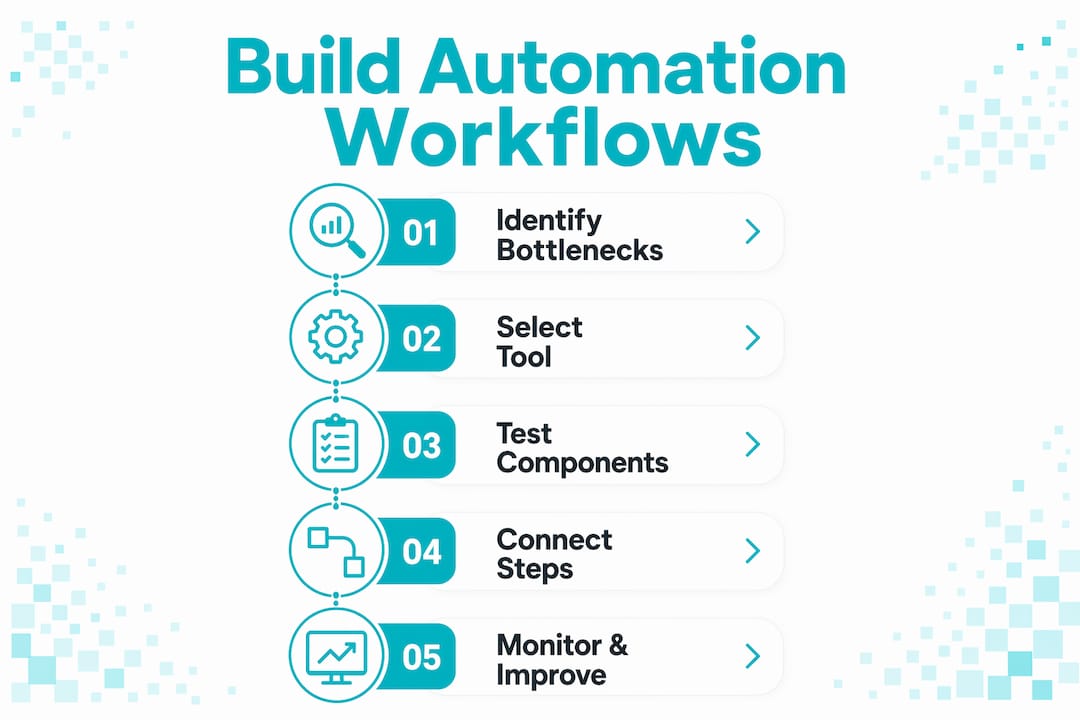
The most effective DIY marketing automation follows a three-stage pattern: capture, nurture, and convert. Each stage needs its own workflow, and each workflow needs a clear trigger before you build it.
Here is a step-by-step implementation framework:
-
Map your funnel manually first. Run your lead capture and follow-up process by hand for two to four weeks. This reveals where prospects drop off before you automate anything.
-
Build your lead capture workflow. Connect your landing page form (Typeform, Tally, or a native website form) to your CRM and email platform using Make.com. Every new submission should trigger an immediate confirmation email and a CRM record creation.
-
Set up a nurture sequence. Write five to seven emails that move a new lead from awareness to consideration. Space them three to five days apart. Use Mailchimp or the free tier of HubSpot to send them automatically based on signup date.
-
Add behavior-based triggers. Custom behavior-based triggers let you segment warm leads from cold ones based on actions like email opens, link clicks, or page visits. A lead who clicks your pricing page three times is not the same as one who opened your welcome email once.
-
Integrate your social channels. Use Make.com to auto-post content from a shared Google Sheet or Airtable database. This keeps your social presence active without daily manual effort.
-
Score your leads. Assign point values to actions: opening an email earns two points, clicking a link earns five, visiting a pricing page earns ten. Leads above a threshold get routed to a sales follow-up sequence automatically.
-
Connect your channels into one view. Siloed marketing tools impair feedback loops and slow down your ability to make good decisions. Use a single dashboard, even a simple Google Data Studio report, to monitor all channels together.
Pro Tip: Test each workflow component in isolation before connecting it to the next stage. A broken trigger in step two will corrupt every downstream action.
What are the common pitfalls in bootstrap marketing automation?
The single biggest mistake bootstrapped businesses make is automating a broken funnel. Automating a broken funnel amplifies waste, not results. If your landing page converts at 1%, sending ten times more traffic through automation will not fix the problem. It will just burn your budget faster.
Here are the most common pitfalls and how to avoid each one:
-
Skipping A/B testing before scaling. Test your headlines, pricing page copy, and calls to action manually before using automation to drive more traffic. One winning headline can double your conversion rate without spending a dollar more.
-
Tool sprawl. Using six disconnected tools creates integration failures and data gaps. Pick the smallest stack that covers capture, nurture, and reporting, then stay disciplined about adding more.
-
Underestimating ad spend thresholds. AI-driven ad platforms need data to learn. The recommended starting spend is $30–$60 per day across three active ad sets. Spending less than that keeps the algorithm in a permanent learning phase with no useful output.
-
Ignoring data quality. Automation is only as good as the data feeding it. A CRM full of duplicate records or unverified emails will produce sequences that go nowhere. Clean your list before you automate it.
-
Over-automating customer touchpoints. Automation handles repetitive tasks well. It handles nuanced, relationship-building conversations poorly. Keep human touchpoints in your highest-value interactions, especially with prospects close to a purchase decision.
The underlying principle is simple: manual outreach and A/B testing must stabilize your funnel before you scale with automation. Skipping this step is the most expensive mistake a bootstrapped business can make.
How do you scale your bootstrap digital marketing system sustainably?
Scaling a bootstrap digital marketing system is not about adding more tools. It is about improving the workflows you already have using data. The businesses that win at this are the ones that treat iteration as a competitive advantage, not a chore.
Here is how to scale without losing control of your costs:
-
Audit your sequences monthly. Pull open rates, click rates, and conversion rates for every automated sequence. Drop any sequence with a click rate below 1% and replace it with a tested alternative.
-
Run continuous A/B tests. Change one variable at a time: subject line, send time, or call-to-action copy. Document every test result in a shared spreadsheet so your learning compounds over time.
-
Shift spend toward outcome-focused platforms. Agentic AI platforms can reduce traditional agency costs by up to 75% by consolidating strategy, content, SEO, and execution into one system. This matters because most small businesses lose budget to agency retainers that deliver vague deliverables instead of measurable results.
-
Build custom workflows for your specific business logic. Enterprise platforms optimize for vendor revenue, not your nuanced workflows. A custom Make.com sequence built around your actual sales cycle will outperform a rigid template every time.
-
Reinvest savings into higher-performing channels. When automation cuts your manual labor costs, redirect that time and money into the channels your data shows are converting best. This is how a bootstrap system compounds into a real growth engine.
The discipline to ship and improve custom automation consistently is more valuable than any single tool you can buy. Most competitors will not do this work. That gap is your advantage.
Key takeaways
A bootstrap marketing automation strategy works when you stabilize your funnel manually first, then automate with low-cost tools, and iterate relentlessly using data.
| Point | Details |
|---|---|
| Start with manual processes | Run your funnel by hand before automating to identify real drop-off points. |
| Use affordable no-code tools | Make.com and n8n replicate enterprise automation for under $100 per month. |
| Fix the funnel before scaling | A/B test headlines and CTAs before using automation to drive more traffic. |
| Respect ad spend minimums | AI ad platforms need $30–$60 per day across three ad sets to exit learning phases. |
| Iterate custom workflows | Discipline in improving behavior-based sequences outperforms rigid off-the-shelf templates. |
Why I think most small businesses automate in the wrong order
Most bootstrapped founders I have worked with make the same mistake: they buy the tools before they understand the problem. They set up a Mailchimp sequence, connect it to a landing page, and call it a marketing system. Then they wonder why the leads are not converting.
The real issue is sequence. Automation amplifies whatever is already happening in your funnel. If your offer is unclear or your landing page copy is weak, automation will just deliver that weak experience to more people, faster. I have seen businesses spend three months building elaborate Make.com workflows before ever testing whether their core message resonated with a single real prospect.
My honest recommendation: spend two weeks doing everything manually. Send follow-up emails yourself. Track responses in a spreadsheet. Have real conversations with leads. That process will teach you more about your customer than any analytics dashboard. Once you know what works, then you automate it.
The other thing I have learned is that AI-driven platforms tied to outcomes beat traditional agency retainers for bootstrapped businesses almost every time. Agencies charge for activity. Good automation charges for results. That distinction matters enormously when every dollar counts.
Custom workflows also age better than templates. A sequence you built around your specific customer behavior will keep working long after a generic template has gone stale. The investment in building it right the first time pays back for years.
— Matthew
How Viralmarketingstudio can build your automation system
Viralmarketingstudio specializes in building the exact kind of cost-effective automation systems this article describes, without the enterprise price tag or the agency retainer model. The team integrates Make.com, AI-driven ad tools, CRM platforms, and custom workflow logic into a single system built around your specific sales process.
If you are ready to stop managing marketing manually and start building a system that works while you focus on your business, Viralmarketingstudio's automation services are built for exactly this. From lead capture workflows to multi-channel nurture sequences, every solution is designed to deliver measurable results at a budget that makes sense for a growing business. Explore the full range of business software solutions to see what a custom-built system can do for your operation.
FAQ
What is a bootstrap marketing automation strategy?
A bootstrap marketing automation strategy is a system for automating lead capture, nurture, and conversion using low-cost or free tools like Make.com, n8n, and Mailchimp, without enterprise software or agency budgets.
What tools work best for DIY marketing automation on a small budget?
Make.com and n8n are the strongest options for workflow automation under $100 per month. Mailchimp and the free tier of HubSpot CRM cover email and contact management for most early-stage businesses.
How much should I spend on AI-driven ads as a small business?
AI ad platforms require a minimum of $30–$60 per day across three active ad sets to exit their learning phases. Spending below that threshold produces unreliable optimization and wasted budget.
Should I automate before or after testing my funnel?
Always test your funnel manually first. A/B test your headlines, pricing page, and calls to action before using automation to scale traffic. Automating a low-converting funnel amplifies the problem, not the results.
How do custom workflows compare to off-the-shelf automation templates?
Custom workflows built in tools like Make.com outperform rigid templates because they reflect your actual customer behavior. Enterprise templates optimize for general use cases, not the specific triggers and sequences that drive conversions in your business.