
Marketing and web strategy is the integrated practice of combining digital marketing channels with website optimization to attract, engage, and convert customers at every stage of the buying journey. For small to mid-sized businesses in 2026, the gap between companies that grow and those that stagnate comes down to one thing: channel focus paired with measurable execution. Tools like HubSpot, Google Analytics, and Semrush give you the data. Frameworks like the 3-3-3 rule give you the discipline. What follows is a practical breakdown of the tactics, channels, and cost structures that actually move the needle for SMBs.
1. What is web marketing and why does it matter for SMBs?
Web marketing, more formally called internet marketing or digital marketing, is the practice of promoting a business through online channels to reach and convert customers. Internet marketing includes seven primary pillars: SEO, Answer Engine Optimization (AEO), content marketing, email marketing, social media, influencer marketing, and affiliate marketing. Each pillar serves a distinct function in the customer journey, from building awareness to closing a sale. For SMBs with limited budgets, understanding which pillars align with your goals is the first decision that determines everything else.

The distinction between "web marketing" and "digital marketing strategies" is mostly semantic. Practitioners use both terms to describe the same discipline. What matters is that your website sits at the center of all of it, acting as the destination every channel points toward.
2. What are the most effective digital marketing channels for SMBs?
Choosing the right channels is the single most consequential decision in any marketing plan. Selecting a small number of channels is critical because each one demands different skills, tools, and time investment. Spreading effort across six channels with a team of two produces mediocre results on all of them.
Here is how the primary channels break down for SMBs:
- SEO for websites: Organic search delivers compounding returns over time. A well-optimized page can generate traffic for years without additional spend. The tradeoff is that results take three to six months to materialize.
- Answer Engine Optimization (AEO): AEO optimizes content to appear in AI-generated answers on platforms like ChatGPT, Perplexity, and Google AI Overviews. This is the fastest-growing visibility channel in 2026 and one most SMBs have not yet prioritized.
- Content marketing: Blog posts, guides, and video content build authority and feed SEO. The ROI is long-term but durable.
- Email marketing: The highest return-on-investment channel for most B2B and e-commerce businesses. Owned audiences are immune to algorithm changes.
- Social media and web: Platforms like LinkedIn, Instagram, and Meta work best for brand awareness and retargeting. Social media requires audience knowledge and trend awareness to convert attention into traffic.
- PPC and paid search: Fast results, but costs scale with competition. B2B paid search in particular carries high acquisition costs that require careful management.
- Influencer and affiliate marketing: Both leverage third-party credibility and social proof. Affiliate marketing is especially cost-effective because you pay only on results.
Pro Tip: Pick two or three channels that match your audience's behavior and your team's capacity. Master those before adding more. A focused digital marketing strategy outperforms a scattered one every time.
3. How website marketing tactics enhance your overall performance
Your website is not a brochure. It is a 24-hour salesperson, and a well-designed website acts as a frontline conversion driver that either captures or loses every visitor your marketing channels send its way. Most SMBs underinvest in website optimization relative to their ad spend, which is backwards.
The web marketing techniques that produce the most measurable lift include:
- SEO and AEO content optimization: Pages structured to answer specific questions rank in search and get cited in AI responses. Both require clear headings, direct answers, and named entities.
- Ad-specific landing pages: Sending paid traffic to your homepage wastes budget. Dedicated landing pages with one call to action consistently outperform generic pages.
- Virtual agents and chatbots: Automated chat tools qualify leads and answer questions around the clock without adding headcount.
- Lead capture forms: Gated content, newsletter signups, and quote request forms convert anonymous visitors into identifiable prospects.
- Personalization: Showing returning visitors content relevant to their previous behavior increases engagement and conversion rates.
- Case studies and social proof: Specific, named results from real clients reduce purchase hesitation more effectively than any feature list.
- Click journey optimization: Tools like Google Analytics and Hotjar reveal where visitors drop off, so you can fix the specific pages costing you conversions.
Websites are dynamic marketing assets that require ongoing iterative testing, not a one-time build. Treat your site the way you treat a sales team: review performance monthly, test changes, and measure results.
Pro Tip: Connect your website to a CRM like Salesforce or HubSpot so every form submission, chat interaction, and page visit feeds into a single customer record. This turns your site from a traffic destination into a revenue intelligence tool.
4. Which online advertising methods offer the best ROI?
Cost structures vary dramatically across online advertising methods, and choosing the wrong one for your business model is an expensive mistake. Paid search for B2B often carries a cost per acquisition near $800 per lead, which only makes sense if your average deal size justifies it. SEO and content marketing carry lower long-term acquisition costs but require patience.
| Channel | Cost structure | Best for | Time to ROI |
|---|---|---|---|
| SEO | Time and content investment | Long-term organic traffic | 3 to 12 months |
| PPC / Paid search | Cost per click | Fast lead generation | Immediate |
| Content marketing | Time and production cost | Authority and SEO support | 6 to 18 months |
| Email marketing | Platform fees | Retention and repeat sales | 1 to 3 months |
| Affiliate marketing | Commission on results | E-commerce and SaaS | 1 to 6 months |
| Social media ads | Cost per impression or click | Brand awareness and retargeting | 1 to 3 months |
Online marketing budgets should prioritize channels with proven long-term ROI rather than spreading spend thinly across every available platform. For most SMBs, a combination of SEO, email, and one paid channel covers the full funnel without overextending resources.
Effective measurement includes brand search volume, assisted conversions, and share of voice in AI-generated answers. These KPIs give you a complete picture of marketing impact beyond last-click attribution, which systematically undervalues awareness channels like content and social.
5. How to build a focused marketing and web strategy using the 3-3-3 rule
Most SMB marketing plans fail not because of bad tactics but because of too many tactics executed without focus. The 3-3-3 rule advises focusing on three core messages, three primary channels, and three measurable outcomes to prevent the sprawl that kills execution quality. Businesses that lack this focus often run activity without strategy, producing effort that cannot be evaluated or improved.
Here is how to apply the 3-3-3 rule in practice:
- Define three core messages. What does your business do, who does it serve, and why should a customer choose you over alternatives? Every piece of content, every ad, and every web page should reinforce these three answers.
- Select three primary channels. Based on your audience's behavior and your team's capacity, choose the three channels where you will concentrate all effort. For most SMBs, this means SEO, email, and one social or paid channel.
- Set three measurable outcomes. Choose KPIs that reflect real business results: qualified leads generated, cost per acquisition, or revenue attributed to digital channels. Vanity metrics like total page views tell you nothing useful.
- Assign ownership. Consolidating marketing execution under one team reduces accountability gaps and produces more consistent reporting. When SEO, design, and ads are managed by three separate vendors with no shared reporting, priorities conflict and results suffer.
- Test and iterate monthly. Digital marketing strategies are not set-and-forget systems. Review your three KPIs every month, identify the weakest performing channel, and run one controlled test to improve it.
You can explore a detailed breakdown of how to apply this approach in Viralmarketingstudio's 2026 channel strategy guide, which maps each channel to specific business goals and audience types.
Pro Tip: Write your three messages, three channels, and three KPIs on a single page and share it with everyone involved in your marketing. If your team cannot recite the strategy from memory, it is not focused enough.
Key takeaways
Effective marketing and web strategy requires a focused channel mix, a conversion-ready website, and consistent measurement against three defined business outcomes.
| Point | Details |
|---|---|
| Channel focus beats channel volume | Mastering two or three channels produces better results than spreading effort across six. |
| Your website is a revenue asset | Ongoing optimization of landing pages, lead capture, and content directly increases conversion rates. |
| AEO is the new SEO | Optimizing for AI-generated answers on ChatGPT and Perplexity is now a core visibility strategy. |
| Cost structures vary by model | B2B paid search carries high acquisition costs; SEO and email deliver better long-term ROI for most SMBs. |
| The 3-3-3 rule prevents sprawl | Three messages, three channels, and three KPIs keep strategy accountable and measurable. |
Why most SMB marketing plans stall before they scale
I have worked with enough small and mid-sized businesses to recognize a pattern that shows up almost every time. The company has tried SEO, run some Facebook ads, sent a few email campaigns, and maybe hired a freelancer for content. None of it connects. Each vendor reports their own metrics, no one owns the full picture, and the business owner cannot tell you which channel is actually driving revenue.
The problem is not the tactics. The problem is the absence of a single framework that ties everything together. When I see a business managing three separate vendors for SEO, web design, and paid ads, I know before looking at any data that there are accountability gaps. Shared reporting does not exist. The SEO agency optimizes for rankings, not conversions. The ads team optimizes for clicks, not qualified leads. The website sits in the middle, unchanged for two years, quietly losing every visitor those channels send.
The businesses I have seen grow consistently are the ones that treat their website as a living revenue system, not a static asset. They test landing pages. They connect their CRM to their site. They track assisted conversions, not just last-click. And they pick a small number of channels and go deep rather than wide.
AEO is the one area where I think most SMBs are genuinely behind and do not realize it yet. Appearing in AI-generated answers on Perplexity or Google AI Overviews is already driving meaningful traffic for businesses that have structured their content correctly. The window to get ahead of competitors on this channel is still open, but it will not stay open long.
— Matthew
How Viralmarketingstudio can build your marketing and web system
If the gap between your current marketing effort and the results you want comes down to execution, Viralmarketingstudio builds the infrastructure that closes it.
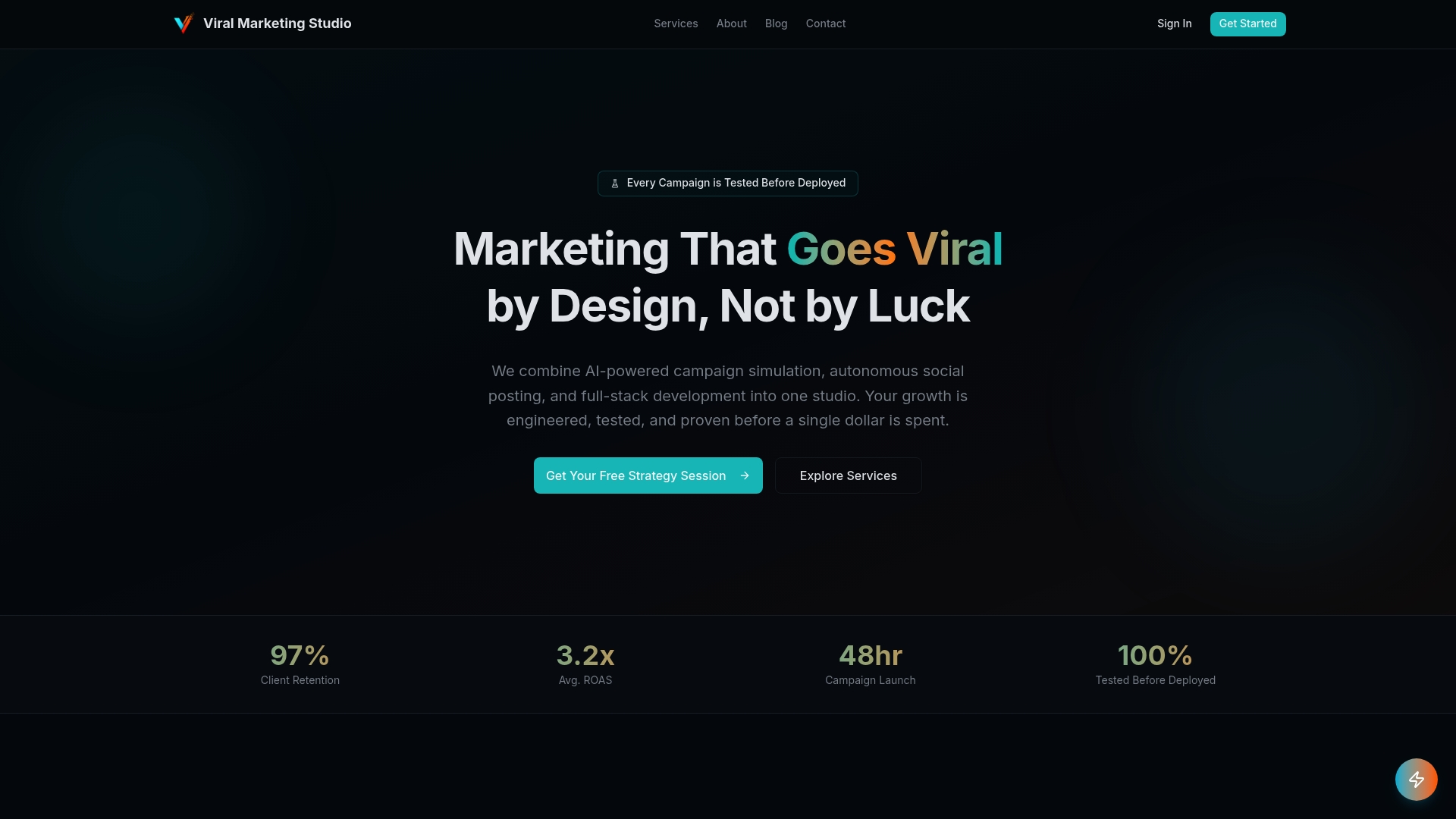
Viralmarketingstudio designs conversion-focused websites, builds marketing automation systems, and integrates business software so your web presence and digital marketing strategies work as one connected system. From web development and graphic design to full-stack marketing execution, the team handles the technical and creative work that most SMBs cannot staff internally. If you are ready to treat your website as a revenue asset and your marketing as a measurable system, start here to see what a focused build looks like for your business.
FAQ
What is web marketing in simple terms?
Web marketing is the practice of promoting a business through online channels including SEO, content, email, social media, and paid advertising. The goal is to attract visitors to your website and convert them into customers.
How many digital marketing channels should an SMB use?
Most small to mid-sized businesses should focus on two to three channels that match their audience and team capacity. Spreading effort across too many channels reduces execution quality on all of them.
What is Answer Engine Optimization (AEO)?
AEO optimizes content to appear in AI-generated answers on platforms like ChatGPT, Perplexity, and Google AI Overviews. It is a distinct practice from traditional SEO and is one of the fastest-growing visibility strategies in 2026.
How do I measure the ROI of my digital marketing strategy?
Track brand search volume, assisted conversions, cost per acquisition, and share of voice in AI-generated answers. These metrics give a more accurate picture of marketing impact than last-click attribution alone.
Why does my website matter for marketing performance?
Your website is the destination every marketing channel points toward. A poorly optimized site loses the traffic your ads, SEO, and social media generate. Ongoing testing of landing pages, lead capture forms, and content directly increases conversion rates.