
The most effective examples of successful marketing campaigns share three traits: authenticity, cultural timing, and measurable commercial impact. Brands like REESE'S, Dove, CeraVe, and Lidl proved this in recent cycles by combining creative risk with operational discipline. The results were not just viral moments. They were revenue events. This article breaks down the campaigns that actually worked, what made them work, and how you can apply the same thinking to your own brand strategy.
What makes a marketing campaign successful?
The best marketing campaigns succeed because they earn trust before they ask for attention. That sounds simple. Most brands still get it wrong.
Five factors separate campaigns that drive real results from those that generate impressions and nothing else:
- Authenticity over polish. Dove's Reddit-led "r/eal Reviews" campaign published the first 50 unfiltered Reddit reviews of its body wash, word for word. Unfiltered consumer content built the kind of trust that curated brand copy never could.
- Cultural moment timing. Lidl did not sponsor the Oasis reunion tour. It hijacked the cultural moment instead, launching a fashion line that captured the buzz without paying for official placement.
- Unexpected creative framing. CeraVe put Kevin Durant in a comedic, native-looking social video demonstrating leg moisturizer. The joke was the product demo. That tension drove shares.
- Operational speed. Diageo used modular, feed-driven creative templates to launch Amazon-compliant ad variants in 1–4 days instead of 15. Speed is a competitive advantage most brands underestimate.
- Lift-based measurement. Counting impressions tells you reach. Measuring incremental lift tells you whether the campaign actually caused a purchase.
Pro Tip: Before launching any campaign, define one primary success metric tied to revenue, not reach. Impressions are a byproduct. Revenue is the goal.
Top examples of successful marketing campaigns: 2025–2026 case studies
The following campaigns represent the strongest real-world marketing success stories from recent cycles. Each one offers a distinct strategic lesson.
1. REESE'S x OREO: the social breadcrumb strategy
The REESE'S x OREO collaboration is one of the best marketing campaigns of all time for a product launch. The campaign used a "social breadcrumb" approach, releasing cryptic hints across TikTok and Instagram before the product was announced. The organic TikTok launch video reached 16 million views. The campaign then generated $97M in retail sales within five months, with 44 billion-plus impressions and 80% of views coming from Gen Z.
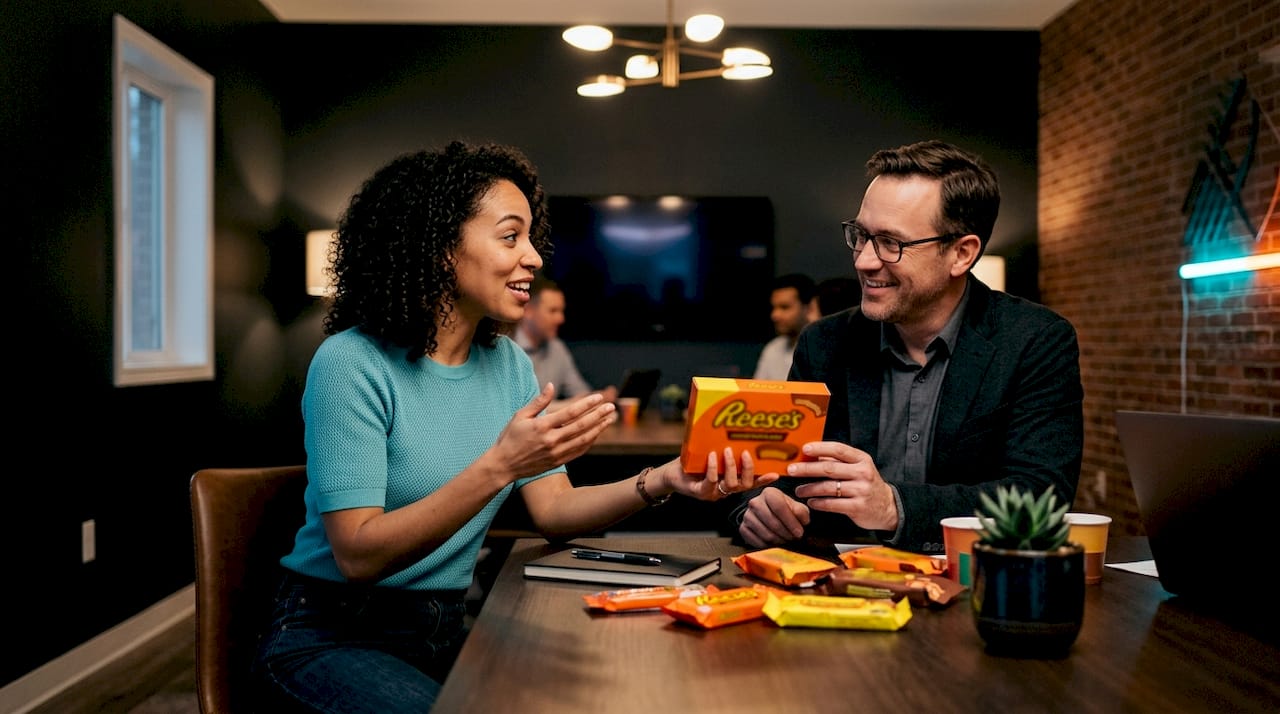
The lesson here is structural. Two legacy brands created genuine novelty by combining their identities. Neither brand diluted its equity. Both amplified it. The campaign exceeded its full-year sales projections in two months, which tells you the demand was real, not manufactured.
2. Dove's "r/eal Reviews": Reddit as a trust engine
Dove's campaign is the clearest example of a brand listening before speaking. The team pulled the first 50 unfiltered Reddit reviews of Dove Body Wash and published them exactly as written, including the critical ones. Those reviews ran on out-of-home placements, social content, and in-store. The campaign drove over 1 billion impressions and generated more than 150 pieces of user-generated content. Sales grew at a high single-digit rate.
The pop-up sampling event in Manhattan drew hour-long queues. That is the real signal. When a brand earns trust, people physically show up. Most brands would have edited the negative reviews out. Dove published them. That decision is what made the campaign memorable.
3. CeraVe's "New Face of Legs" featuring Kevin Durant
CeraVe did not run a traditional celebrity endorsement. The brand cast Kevin Durant in a comedic, social-first video demonstrating its leg moisturizer as if it were a sports performance product. The format looked native, not produced. The 43% sales lift from a three-week campaign, alongside 4.1 billion PR impressions and 83 million organic video views, confirms the approach worked.
The insight is that humor lowers resistance. A straightforward product demo would have been ignored. A comedic demo with a recognizable athlete created a reason to share. Sharing drove reach. Reach drove sales.
4. Lidl's "Lidl by Lidl": hijacking a cultural moment
When Oasis announced their reunion tour, Lidl launched a fashion brand in response. The "Lidl by Lidl" collection included a beer and a waterproof parka designed to look like Oasis merchandise. The parka sold out in two minutes. The campaign generated 1.1 billion in reach and 195,000 purchase attempts. Lidl captured more share of voice than four competitors combined, with 279 news publications covering the story.
Lidl paid nothing for official sponsorship. The brand won by moving faster than anyone else. This is a textbook example of viral product launch thinking applied to a cultural window.
5. DUDE Wipes: humor as a media filter
DUDE Wipes built its 2026 media plan around a single rule: every placement had to be funny first. The brand ran across TV, connected TV, YouTube, and retail media with humor as the consistent thread. The result was the highest January sales in company history, up more than 19%, with tripled household penetration and increased repeat usage. The campaign won Gold at The Drum Awards.
The strategic move was treating humor not as a tone but as a filter. Every creative decision ran through the question: is this funny? That constraint forced consistency across channels, which is something most multi-channel campaigns fail to achieve.
6. Canva's "The Intervention": emotional storytelling over features
Canva cast an Emmy-nominated actress known for her role as a therapist in The Sopranos to address presentation anxiety in a campaign called "The Intervention." The brand never led with product features. It led with the emotional pain of bad presentations. The campaign reached 84% of US knowledge workers aged 18–64 and drove $22.6 million in incremental revenue.
The lesson is direct: feature-heavy messaging loses to emotional resonance. Canva sold relief from a problem, not a software subscription. That framing is what drove conversion at scale.
7. Diageo: automation as a campaign advantage
Diageo built a modular, feed-driven creative system for Amazon commerce media. The system generated 100-plus Amazon-compliant creative variants rapidly. Production costs dropped by 76% and launch speed went from 15 days to 1–4 days. Return on ad spend doubled compared to Prime Day baselines.
This is not a creative story. It is an operational one. Diageo won by removing the bottleneck between strategy and execution. Brands that can test and launch faster will outperform brands with bigger budgets but slower processes.
How to measure whether your campaign actually worked
Most marketers measure the wrong things. Impressions, clicks, and engagement rates tell you what happened. They do not tell you why it happened or whether your campaign caused it.
The right measurement framework uses incrementality. Lift tests compare exposed vs unexposed groups to estimate true ad effectiveness. This approach separates the sales your campaign caused from the sales that would have happened anyway.
Three measurement principles that apply to every campaign:
- Use control groups. Run a holdout group that does not see your campaign. Compare their behavior to the exposed group. The difference is your true lift.
- Convert lift to absolute ROI. A 10% lift sounds good. Against a small base, it may not cover costs. Absolute ROI accounting for customer lifetime value gives you the real number.
- Ignore vanity metrics as primary KPIs. Shares and views are signals, not outcomes. Tie every campaign to a revenue or retention metric before launch.
Pro Tip: Set your measurement plan before the campaign launches, not after. Retroactive measurement always favors the campaign. Prospective measurement tells you the truth.
How to choose the right campaign type for your brand
Not every brand should run a humor-first campaign. Not every brand has a Kevin Durant budget. The right campaign type depends on your brand's credibility, your audience's expectations, and your operational capacity.
Use this framework to match campaign style to situation:
- Authenticity-first campaigns work best for brands with strong community trust and real product performance. Dove's Reddit approach required genuine product reviews worth publishing. If your reviews are weak, this strategy backfires.
- Cultural moment hijacking requires speed and a brand personality that fits the moment. Lidl worked because the brand's value positioning aligned with the Oasis audience. A luxury brand running the same play would have looked desperate.
- Celebrity or influencer demos work when the talent fits the product's tone. CeraVe succeeded because the humor was self-aware. A straight-faced Kevin Durant moisturizer ad would have failed.
- Automation-led commerce media suits brands with large SKU catalogs and frequent promotional windows. Diageo's approach makes sense for a spirits portfolio. It would be overkill for a single-product startup.
- Emotional storytelling works across almost every category, but requires a clear problem to solve. Canva identified presentation anxiety as the entry point. Your brand needs an equivalent emotional hook.
Pro Tip: Map your campaign type to your brand's current trust level with its audience. A brand that has not yet earned trust should not lead with humor. It should lead with proof.
Key takeaways
The most successful marketing campaigns combine authentic audience insight, cultural timing, and measurement frameworks that track revenue, not just reach.
| Point | Details |
|---|---|
| Authenticity drives trust | Publishing unfiltered consumer content, as Dove did, outperforms polished brand copy. |
| Cultural timing creates free reach | Lidl's Oasis hijack generated 1.1 billion in reach without official sponsorship costs. |
| Humor requires consistency | DUDE Wipes applied humor as a filter across every channel, not just one placement. |
| Lift testing beats attribution | Control group experiments reveal true campaign causality that platform attribution cannot. |
| Speed is a competitive edge | Diageo cut launch time from 15 days to 1–4 days and doubled return on ad spend. |
What separates great campaigns from good ones
The campaigns I find most instructive are not the ones with the biggest budgets. They are the ones where someone made a decision that most brand managers would have killed in a committee meeting.
Dove published a review that called their product "fine, I guess." Lidl launched a fashion brand in 72 hours. CeraVe made Kevin Durant look ridiculous on purpose. Each of those decisions required someone to override the instinct to play it safe.
The pattern I keep seeing is that the best campaigns come from brands that have done the hard work of understanding their audience before the brief is written. Dove knew Reddit users valued bluntness. Lidl knew their shoppers had a sense of humor about the brand's budget positioning. CeraVe knew Gen Z responds to self-aware content. That audience knowledge is not a creative insight. It is a research outcome.
The other thing I would push back on is the idea that you need a massive budget to run a campaign worth studying. DUDE Wipes is not a Fortune 500 company. Canva's emotional storytelling campaign worked because the insight was sharp, not because the production was expensive. The brands that struggle are the ones that confuse budget with strategy.
My recommendation for 2026: pick one campaign type, commit to a measurement plan before launch, and resist the urge to add channels just because they are available. Focused campaigns with clear success metrics consistently outperform sprawling ones with vague goals.
— Matthew
How Viralmarketingstudio can help you build campaigns that perform
The campaigns covered here succeeded because strategy, creative execution, and operational infrastructure worked together. Most brands have one or two of those. Getting all three right at once is where Viralmarketingstudio comes in.
Viralmarketingstudio builds the systems behind high-performing campaigns: from brand identity and design to custom business software that automates the operational side of media and marketing. Whether you need a product launch strategy, a faster creative production pipeline, or a web presence that converts, the team at Viralmarketingstudio works across every layer of your growth stack. The goal is the same as every campaign in this article: measurable results, not just activity.
FAQ
What makes a marketing campaign successful?
A successful campaign combines audience trust, a clear creative idea, and a measurement plan tied to revenue. Campaigns like Dove's Reddit reviews and CeraVe's Kevin Durant demo succeeded because they earned attention through authenticity, not just media spend.
What is the difference between impressions and lift in campaign measurement?
Impressions measure how many people saw your ad. Lift measures incrementality by comparing exposed and unexposed groups to determine how many purchases your campaign actually caused.
How did the REESE'S x OREO campaign achieve such strong results?
The campaign used a social breadcrumb strategy, releasing cryptic hints before the product launch. It reached 44 billion-plus impressions and generated $97 million in retail sales within five months, exceeding full-year projections in two months.
Can small brands run campaigns as effective as large ones?
Yes. DUDE Wipes and Canva both ran campaigns that outperformed larger competitors by focusing on a single strong insight rather than budget size. The key is a clear audience understanding and a consistent creative filter.
What is cultural moment hijacking in marketing?
Cultural moment hijacking means launching a campaign that connects to a trending event without paying for official sponsorship. Lidl's "Lidl by Lidl" fashion line, timed to the Oasis reunion, sold out in two minutes and generated more press coverage than four competitors combined.